
NVISAGE

Blogs & Coverage

Five Hallmarks Of Strong Brands: Emphasizing Brand Experience & More.

Five Hallmarks Of Strong Brands: Emphasizing Brand Experience & More.

Featured

Notwithstanding the colossal impact that the pandemic has had on global economies and businesses alike, a striking obverse saw a surge of businesses that grew out of the necessities of the new normal. A glut of business drowned away, simultaneously others sailed smoothly through these troubled waters. Some brands have always been evocative, others attempt to be. Albeit, big or small, the markers of strength are not determined by scale but by altogether other time-tested hallmarks. Here’s a look at some.Strong brands are often: Pivoted around a clear and defined purpose While every brand’s ultimate objective is profitability, it usually doesn’t survive long if that is its sole objective. A pointer of its strength, stability, longevity and relevance is the value it adds for a customer. Does it solve a problem, address gaps, attend to stated or unstated needs? Does it do more than sell its product / service? How does it touch a chord in their lives? Take for example, IKEA that is anchored around creating a better everyday life for very many people through their well-designed, functional and affordable products. Clearly, the focus is on the ‘better everyday life’. No wonder then that the value provided outweighs its transactional aspect. Oh, and the IKEA shopping experience only sweetens the deal. Image Courtesy: www.ikea.com Often brands that build themselves only on the premise of good quality and price are outdone by another that offers either a better price or a higher quality. But a brand that has pulled it off brilliantly is Aldi with their promise of —‘The highest quality – the lowest prices’. One of the ingredients in their secret sauce is… measurability. With a measureable brand promise that builds trust It takes time, consistency, definable expectations and delivery to build that oh so elusive credibility. Tall promises are easy to make, and when they are delivered, the brand wins trust! Sure enough Aldi didn’t pull their promise out of magician’s hat but based it around a carefully thought through business model and operational efficiency. A dominant private label, easy to restock packaging, translates into a stronghold on the product offering. This then allows them to size their stores into smaller, more efficient units. Their promise stands on solid ground with a measure metric.Some other quantifiers of measure metrics are time, distance and quality, ie; FedEx’s money back guarantee, Domino’s Pizzas 30 minute assurance, M&M chocolates that never melt in your hands. Image Courtesy: www.fedex.com Communicate in a clear and recognizable manner Brands are constantly communicating— textual, visual, verbal content, events, engagements, activities, interactions, reactions. But the winners are not always those with the loudest voice, for even the tiny can be mighty. All it takes is communication in a consistent style coupled with a positive takeaway.Recently Micromax’s CEO Rahul Sharma unveiled its reinvented avatar. He journeys us through the brand’s peaks and dips culminating it with his sights set on a brighter, better tomorrow. A horizon we are ready to buy into for it resonates with us on many levels —the need for resurgence, the spirit of nationalism. Watch video (https://www.youtube.com/watch?v=aRo69b1wTNg&feature=emb_logo) But look closer and you can’t help but notice the cohesive collaterals, a stylistically definitive identity, evident in the color palette, layout and composition, typography, the tone of voice. It’s intentional and planned ahead of time, falling squarely under the purview of branding, a prelude to marketing activities. The punch of a well-crafted identity lies in its appeal, cohesion and recognisability. Image Courtesy: www.micromax.com Responsiveness An oft repeated word in this VUCA world, brands that demonstrate agility and appropriate responsiveness to the larger picture surely stay relevant. The larger picture could be a broader socio-cultural context as seen in the Micromax video or as in this recent Baggit commercial. Or it could be a geographical context such as the time Disneyland Toyko offered Japanese staples in the menu, but the Japanese were keen to savour an All-American experience including the food. The master story-tellers quickly course-corrected and didn’t make the same mistake when the Paris park opened. Except that the French preferred their wine and cheese over burgers, once again Disney was quick to respond. Large And lithe, a feat indeed! Engage, Inspire, Motivate Brands that reach out to connect are the brands that We connect with easily. Most customers prefer dialogues over monologues, engagement over mere exhibition, sincere connection over a sales push. . A case in point is Lego Ideas, not only does the brand inspire millions to build breathtakingly amazing Legos, but they also showcase and honour selected creations. The finalist’s creation is then turned into an official set. In 2015, popular CRM platform Hubspot thanked their 15000 customers by dropping 15000 orange ping pong balls down four storeys, in what they called Operation Orange. It was certainly momentous, not only for them but their fans too. Image Courtesy: www.hubspot.com Sure, marketing is critical in a hyper-connected world but invest in it after there is solidity to the purpose and promise, for then there is authenticity in the connections you make. Key takeaways Building a brand is not an overnight task, nor is it a herculean one. It doesn’t necessarily require breaking the bank but it does certainly require far and smart thinking plus sweat. Lots of it! And then much more too, for these are a handful of the hallmarks of strong brands. But go on; tick these check boxes while you build your brand. If you’d like to engage with us for more tips, tools and techniques, we’d love to hear from you at Namrata@nvisage.in This is the first of a two part series on branding and design. References: https://www.tasteofhome.com/collection/reason-aldis-groceries-are-so-cheap/ https://economictimes.indiatimes.com/magazines/panache/micromax-is-all-set-to-push-china-out-of-the-picture-with-its-new-phone-brand-in-on-nov-3/articleshow/78828629.cms?from=mdr https://medium.com/better-marketing/the-secret-of-disneys-brand-a1e4432cf6fd Written by Namrata Sachdev Founder NVISAGE and a retail veteran with a penchant for words, visuals, strategy and customer psychology. I combine them to create one-of-a-kind, hybridized outcomes for brands and businesses. And, I enjoy working with small and growing brands to help them find a firm footing. NVISAGE, a Multidisciplinary Creative Studio, we go far beyond the visual WOW to make each brand experience unified, shoppable and memorable! If you’d like to start a dialogue about your business or ask us about our Curated Bite-sized Offerings for MSMEs, drop us a line on namrata@nvisage.inContinue Reading

The Dilemma Of Good-Looking Design
Building A Brand · Marketing · Retail Design Concepts

The Dilemma Of Good-Looking Design

Design’s biggest stumbling block is its looks. So enamoured are we by its appearance that often we are unable to look beyond its aesthetic aspects. Frequently mixed up with its cohorts —Art, Appeal, and Style, its purpose lies far beyond. Good ’looking’ design is the cherry on the cake, unsubstantial without the cake. Repeatedly emphasizing its good’looking’ness can hurt its own cause. It could be one of the reasons design has been given a lower denomination in business functions, ending up as a cosmetic afterthought. And, designers could be adding to this devaluation by solely focusing about its external features.If the problem lies with the yardstick of design, is there then a measure-metric? Whether you are a creative professional or a brand builder, a business owner or an entrepreneur choosing one design over another, here’s a litmus test. A Good Logo design reflects a brand’s ideology It is a tempting prospect to have a logo designed before laying the foundations of the brand. But a well-thought out logo design transcends its ‘looks’ to articulate the brand philosophy, and hence should be subsequent in the process. The first (https://nvisage.in/five-hallmarks-of-strong-brands/)of this two-part post series dives deep into it. However, a case in point is the Northwest airlines logo, the one used from 1989–2003 was a masterpiece, a triangle within the compass-like circle pointing northwest, implying a W when combined with the N. The redesign post-merger was a subject of many a conversations, however it also became an inadvertent blunder as seen in this picture. Image source: https://www.underconsideration.com/speakup/archives/001985 A Good Logo Design is effective The very nature of design is to offer solutions. To work within a framework. And, frameworks have definitions, limitations, boundaries. A beginning and an end. Deep dive into the brief, articulate the objectives, suss out what’s left unsaid. Lay it out. Lay it bare. A well-defined brief is a tool to gauge if the design has met the objectives. A tool for all— brand owners, builders and designers. Just like water without a container, spills over, so can design projects without a definitive brief. Some examples of a creative brief A Good Logo Design communicates well: Ever been handed a visiting card of a company you are unaware of and after a few minutes of conversation, exclaim ‘Ah! That’s what you do!’ Obviously something was amiss. At its very core, design needs to communicate well. And to do so in a manner that is — Concise, Complete, Succinct, AND preferably Simplistic. However, simplicity requires clarity. Nothing important should be left unexpressed and everything unnecessary should be left out. Weed out the wheat from the chaff. Like glass that lets you see through, a logo design should allow the brand essence to shine through. Some examples of a creative brief Target’s bullseye or LG’s combination mark, blending in their tagline ‘Life’s Good’ with a happy face, seem so natural, seamless and effortless AND communicate the brand’s essence in totality. A Good Logo Design communicates well: Ever been handed a visiting card of a company you are unaware of and after a few minutes of conversation, exclaim ‘Ah! That’s what you do!’ Obviously something was amiss. At its very core, design needs to communicate well. And to do so in a manner that is — Concise, Complete, Succinct, AND preferably Simplistic. However, simplicity requires clarity. Nothing important should be left unexpressed and everything unnecessary should be left out. Weed out the wheat from the chaff. Like glass that lets you see through, a logo design should allow the brand essence to shine through. A Good Logo Design is process-oriented: Much as we love the idea of a mad-hatter genius, the wizard who wows us with his eureka-ic revelations, the crazy, erratic creative genius who stuns us with a masterstroke, good design is an intensive, laborious process. It’s the pinnacle of the uphill climb not a parachute jump out of nowhere. That Olympic sprinter practices the 400 meter dash a zillion times. By that definition then, design is iterative, explorative and demonstrative. It amasses myriad possibilities and then funnels them into refined outcomes. Hence the simplicity. Hence the clarity. Hence the effectivity. Not only is Evernote’s logo clever and meaning coded, it’s an outcome from an in-depth exploration. And of course, Their tagline ‘Remember everything’ is fitting. A Good Logo Design belongs so rightly where it is That one cannot imagine it not being there. It fits so well, a hand in the glove! Good Design owns the spot it is experienced in. No square pegs in round holes. Soultree, the ‘r’ arches elegantly over the e, echoing a branch. The soft triangular seal has fine concentric circles of a tree's cut section, hinting at circles of community and continuity. This is further reinforced by their 3 point promise — ethnical, organic, ayurvedic. Simple, subtle and appropriate. Sun microsystems’s ambigramed logo, is considered one of the most outstanding logos in history. Look at it from any direction, just like the planets that revolve around the sun. Soultree, the ‘r’ arches elegantly over the e, echoing a branch. The soft triangular seal has fine concentric circles of a tree's cut section, hinting at circles of community and continuity. This is further reinforced by their 3 point promise — ethnical, organic, ayurvedic. Simple, subtle and appropriate. Sun microsystems’s ambigramed logo, is considered one of the most outstanding logos in history. Look at it from any direction, just like the planets that revolve around the sun. A Good Logo Design has a quality of scalability: And adaptability, of fluidity and transference across mediums, materials and spaces. Be it visual, graphic, UX, UI, spatial or experiential. When a design is born from conceptual thinking, it has a dynamic, responsive, lifelike quality to it, allowing for this easy transference. Example of scalability, an adaptive logo for retail mall design to food trucks. From packaging to merchandise to the app. And summing up, A Good Logo Design stands the test of time For brands grow and evolve, never static, never finished, in a perpetual state of momentum and expansion. A design that is instep with a changing world will live long beyond the launch day.So go ahead, evaluate how good it looks but measure it by what it does, for the brand, for the business. When Design is as the brand does, design delights! A Good Logo Design has a quality of scalability: And adaptability, of fluidity and transference across mediums, materials and spaces. Be it visual, graphic, UX, UI, spatial or experiential. When a design is born from conceptual thinking, it has a dynamic, responsive, lifelike quality to it, allowing for this easy transference. No wonder some of the most recognizable logos in the world work equally well on a cup or a truck, a road sign or in an app icon. If you’d like to engage with us for more tips, tools and techniques, we’d love to hear from you at namrata.s.sachdev@gmail.com This is the second in a two part series on branding and design. Read the first here (https://nvisage.in/five-hallmarks-of-strong-brands/%20) References: https://99designs.com/blog/logo-branding/famous-logos/ https://imjustcreative.com/evernote-logo-icon-brand-identity-process/2018/11/06 https://www.insider.com/meaning-starbucks-apron-colors-2017-7 Written by Namrata Sachdev Founder NVISAGE and a retail veteran with a penchant for words, visuals, strategy and customer psychology. I combine them to create one-of-a-kind, hybridized outcomes for brands and businesses. And, I enjoy working with small and growing brands to help them find a firm footing. If you’d like to engage with us for more tips, tools and techniques, we’d love to hear from you at Namrata@nvisage.in This is the second in a two part series on branding and design. Read the first here (https://nvisage.in/five-hallmarks-of-strong-brands/%20) NVISAGE, a Multidisciplinary Creative Studio, we go far beyond the visual WOW to make each brand experience unified, shoppable and memorable! If you’d like to start a dialogue about your business or ask us about our Curated Bite-sized Offerings for MSMEs, drop us a line on namrata.s.sachdev@gmail.com
View Full Blog
How To Adapt Your Retail Format To The ‘Future Of Retail’
Retail Design Concepts

How To Adapt Your Retail Format To The ‘Future Of Retail’

The past few years have seen several brands and retailers make forays in the arena of bricks & clicks. However, there are many that still grapple with which path to follow, to ensure their balance sheet stays in the black. Here is a curated map of retail brands and the strategies actioned by them in the face of this phenomenon that is reshaping the retail landscape across the globe. Integration: Consumers participate in different channels on the path to purchase thereby ‘blurring’ the distinction between channels, it is high time retailers follow suit! UK retailer Tesco, known as Home Plus in South Korea, vaulted to national number one player in the online marketplace. They brought virtual stores to the time-starved Korean consumers at a point in the day when they had time on their hands. The result—an increase of 130 percent in online sales. Watch video (https://youtu.be/GEwvh_8MQb8?si=scLabVK2diyL9P_s) Convenience in delivery is the new www—What I want, Where I want, When I want. (1) Reverse Showrooming The most important part of any strategy is facing reality. Technology is influencing consumer’s choices and storefront retailers are at a disadvantage. In big ticket products like electronics and consumer white / hard goods, there is a significant impact of showrooming, the phenomenon of researching offline and purchasing online. Samsung counteracted this by reverse showrooming- the storefront with the intent of showcasing. At Samsung 837 in New York city, the brand presents its array of products for consumers to examine, play with, and admire them. They may hold less inventory but sure sell the idea that the Samsung experience will make shoppers happier than any other tech company. Showrooming can work well wherein the product is the differentiating factor and it is a planned purchase. Make the product alive and bring it closer to the consumer. Experiential Retail: Experiential retail is about providing shoppers an immersive experience not available online. Smart operators are boosting their cultural and entertainment offerings of their properties. This trend will intensify going forward. Jordan’s Furniture, a New England chain, achieves some of the highest furniture sales productivity in the country by using themed “streets” within its stores, a Mardi Gras show, an IMAX 3-D theatre, a laser light show, food courts, a city constructed of jellybeans, a motion-simulation ride, a water show, a trapeze school, and special charity events Convenience in delivery is the new www—What I want, Where I want, When I want. (1) Reverse Showrooming The most important part of any strategy is facing reality. Technology is influencing consumer’s choices and storefront retailers are at a disadvantage. In big ticket products like electronics and consumer white / hard goods, there is a significant impact of showrooming, the phenomenon of researching offline and purchasing online. Samsung counteracted this by reverse showrooming- the storefront with the intent of showcasing. At Samsung 837 in New York city, the brand presents its array of products for consumers to examine, play with, and admire them. They may hold less inventory but sure sell the idea that the Samsung experience will make shoppers happier than any other tech company. Showrooming can work well wherein the product is the differentiating factor and it is a planned purchase. Make the product alive and bring it closer to the consumer. Experiential Retail: Experiential retail is about providing shoppers an immersive experience not available online. Smart operators are boosting their cultural and entertainment offerings of their properties. This trend will intensify going forward. (2) Jordan’s Furniture, a New England chain, achieves some of the highest furniture sales productivity in the country by using themed “streets” within its stores, a Mardi Gras show, an IMAX 3-D theatre, a laser light show, food courts, a city constructed of jellybeans, a motion-simulation ride, a water show, a trapeze school, and special charity events When the product has hedonistic and aspirational value, think experience! Gourmet food and fine dine restaurants, Adventure gear and REI (Recreational Equipment Inc.), Fashion styling and the new Nordstrom store in LA. Interaction & Engagement Often product differentiation is minimal, advertising is unnoticed and or the product / service is intangible, the key to business success lies in creating an interactive and engaging shopping experience that online cannot reproduce. UK Retailer, Topshop launched a campaign where shoppers received a free styling and make-up session and were invited to create a digital ‘Wish you were at Topshop’ postcard using Instagram. It generated 640 blog posts, with a reach of 1.4 million, as well as 5.3m views on Facebook and 2,000 comments. No surprise that Topshop became the number one fashion retailer on Instagram in July 2013. Understand, adapt, engage and involve the consumer to generate excitement and build a connection with the brand. Intelligent Technology In the context of future of retail, IT advances from Information Technology to Intelligent Technology. Data will be mined to yield deeper, relevant insights and predict future shopping behaviour. Global research expert Forrester has speculated that the future consumer will want not just responsive interactions but adaptive ones, with content delivered in a way that best suits them as individuals, and their particular device.(3) Artificial Intelligence (AI), Virtual Reality (VR) and Augmented Reality (AR) will be game-changers in the years to come. Local, Personal and Relevant will be the intonation for curating brand offerings. In conclusion, we can say that the transformation of the retail experience is not just about bringing the convenience and speed of the online shopping experience into the store. The real goal is to find ways to help consumers reduce the scope of their search, simplify their shopping experience, and in the process, make retail stores more intuitive and brands more attractive. (4) Namrata Sachdev, 9th March 2018. References: 1.Seven must-know digital trends for Retail. 2.The E-Commerce Imperative - GVA Worldwide 3.Omni-channel retail: joining up the consumer experience 4.Building a better shopping experience

View Full Blog
Iconic Shopping Experiences From Around The World
Retail Design Concepts

Iconic Shopping Experiences From Around The World

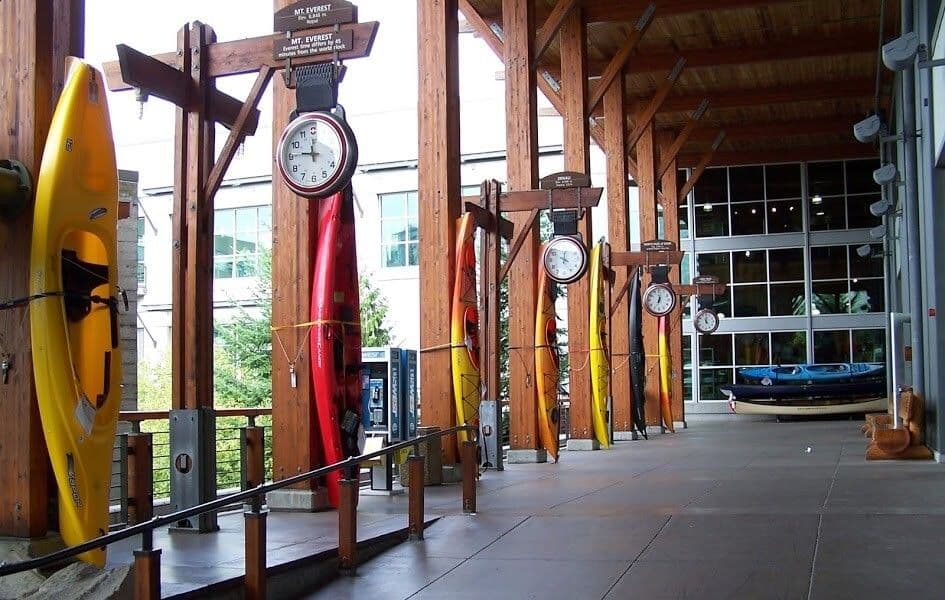
Are you a globe-trotting shopping enthusiast? Or at the very least wish to live such an idyllic life? Here’s a glimpse of some of the most iconic shopping scapes the world has to offer, from public markets to heritage stores, here’s a curated list. REI Recreational Equipment Inc. (REI), began as a group of 23 mountain climbing buddies and is now America's largest consumer cooperative. Their passion for outdoor adventure is clear, when you visit any of the stores across the country. It’s a place where outdoor enthusiasts go to be inspired. They know first-hand the importance of quality outdoor gear and stand behind all their products with a 100% satisfaction guarantee, and have a reputation for both quality and integrity. Today, consumer-oriented goods, particularly clothing and family camping equipment are the mainstay of REI's business. REI continues to sell climbing and backpacking gear. REI operates 154 retail stores in 36 states. Its flagship stores are in Cascade, Seattle, Washington; Bloomington, Minnesota; Washington, DC; New York City; and Denver, Colorado. In the Seattle store, interactive areas include “the pinnacle” a 65 feet tall freestanding indoor climbing wall and a 470 foot mountain bike test trail. REI sure knows how to turn shopping into an experience and customers into devoted patrons. Watch video (https://youtu.be/7bLpxW2s-Ng) Bass Pro Shops This outdoor retailer sells fishing gear, camping equipment and clothing. However, it also has an added bonus for nature enthusiasts: Wildlife mounts are displayed throughout each store. The museum-quality mounts of animals like bears, moose and deer can be seen in replicas of their natural settings. Visitors are also treated to fish-filled aquariums and in some cases, a separate aquarium with live alligators. The retailer says for many, it’s like a trip to a natural history museum. “People take vacations to travel to our stores,” said spokesman Larry Whiteley. “They have weddings in them. Yellow school buses bring kids there for educational experiences.” Bass Pro Shops has 94 existing stores in the United States and Canada. All stores have an indoor water feature that showcases fish species that are indigenous to the area. Bass Pro Shops is also known for its Outdoor Skills Workshops, teaching skills as varied as fly fishing, Dutch oven cooking, archery hunting with an archery range in the store, and GPS navigation. They hold many skills workshops with the top names in the outdoor world. Pike Place Market is a public market in Seattle, United States. It opened in August 1907, and is one of the oldest continuously operated public farmers' markets in the United States. It has more than 10 million visitors annually; Pike Place Market is Seattle's most popular tourist destination and is the 33rd most visited tourist attraction in the world. And, with good reason, the fish throwing antics of the fishmongers are very entertaining and much appreciated by tourists. It has a variety of unique shops such as antique dealers, comic book and collectible shops, small family-owned restaurants, fishmongers, fresh produce stands and craft stalls. Besides them, the market hosts Dining, Nightlife and Street Performers and Musicians. From fishing to furniture, we peep into Jordan’s Furniture, a New England chain, an American retailer that achieves some of the highest furniture sales productivity in the country by using themed “streets” within its stores, for eg: a Mardi Gras show, an IMAX 3-D theater, a laser light show, food courts, a city constructed of jellybeans, a motion-simulation ride, a water show, a trapeze school, and special charity events. We cross the Atlantic and land on the romantic streets of Paris, here, another retailer dazzles us with its humungous 43 metre high domed ceiling in a heritage architectural landmark site. Galeries Lafayette Paris Haussmann is the flagship store of the upmarket chain of departmental stores in France. The architecture of the store is art nouveau, with a remarkable dome and a panoramic view of Paris that has made it a tourist attraction of Paris. Inaugurated in 1912 it is a 70,000 m2 store. The store offers fashion, food, cultural exhibitions from time to time, events such as fashion shows and services such as personal shopper, VIP services include the ordering of limousines or package deliveries to hotels. Known for its signature style of suspended Christmas trees, Galeries Lafayette offers you luxury and fine fashion in a shoppers paradise. The Grand Bazaar at Istanbul is often regarded as one of the first shopping malls of the world. It is one of the largest and oldest covered markets in the world, with 61 covered streets and over 4,000 shops and 250,000 to 400,000 visitors daily. Seeped in history, the bazaar was constructed in 1455 and achieved its final shape at the beginning of the 17th century. The enormous extent of the Ottoman Empire in three continents, and the total control of road communications between Asia and Europe, rendered the Bazaar and the surrounding hans or caravan serais the hub of the Mediterranean trade. According to several European travellers, at that time, and until the first half of the 19th century, the market was unrivalled in Europe with regards to the abundance, variety and quality of the goods on sale. In present time, the Grand Bazaar merchants have also anticipated the needs and concerns of the tourist trade. The food stores advertise Iranian caviar ready to travel home with you in your checked luggage-sealed in dry-ice packages to ensure complete confidence in your purchase. The skinny lanes of Khan Al Khalili in Cairo, Egypt are basically a medieval-style mall. This agglomeration of shops – many arranged around small courtyards – stock everything from soap powder to semiprecious stones, not to mention tacky toy camels and alabaster pyramids. The bazaar is loud, crowded, colorful, and exciting—full of all kinds of goods and shiny baubles. Cairenes have plied their trades here since the khan was built in the 14th century, and parts of the market, such as the gold district, are still the first choice for thousands of locals. This market also dates back to the 14th century when Emir Dajaharks Al-Khalili built a large market complex on the site of the Za’afran Tomb, which had been the burial place of the Fatimid rulers of Egypt. This construction was part of the process of rebuilding started under Sultan Barquq (ruled 1382-1399) to help the city recover from the ravages of the Black Death throughout the 13th and 14th centuries. Today the market has been modernized significantly, but there are still portions that display the original Mamluk style architecture, which featured great archways and vaulted ceilings. Conclusion: Iconic retailscapes are those where design is about creating experiences that consumers crave. It could be seeped in history or futuristic, heritage or modern, a single store or a chain, as long as the retailer/s addresses needs the consumers never knew they had! Sources: https://en.wikipedia.org/wiki/REI https://www.seattletimes.com/business/rei-taking-design-to-new-heights/ https://en.wikipedia.org/wiki/Bass_Pro_Shops https://www.cnbc.com/2012/04/19/Unusual-Retail-Experiences.html?slide=4 https://hbr.org/2011/12/the-future-of-shopping http://www.oddthingsiveseen.com/2013/05/mardi-gras-in-vismassachusetts-jordans.html https://en.wikipedia.org/wiki/Galeries_Lafayette https://en.wikipedia.org/wiki/Grand_Bazaar,_Istanbul Why we buy- Paco Underhill https://www.memphistours.com/Egypt/Egypt-Wikis/Cairo-Attractions/wiki/Khan-El-Khalili https://www.lonelyplanet.com/egypt/cairo/attractions/khan-al-khalili/a/poi-sig/406432/355225

View Full Blog
The Coming Of Age Of Indian Retail: Evolution In Apparel Store Design
Retail Design Concepts

The Coming Of Age Of Indian Retail: Evolution In Apparel Store Design

Organized Indian Retail is a relatively new sector, not over 30 years old with ‘Pantaloon’ and Shoppers Stop being the pioneers in the business. Besides them, there were only a handful of early adopters in the first decade, a scenario that changed rapidly in the second decade. The late 90’s to 2008 saw a plethora of emerging retail brands in India. With apparel and fashion taking the lead, other lifestyle needs were not too far behind. With the economic wave’s upward crescent and disposable income on the rise, the burgeoning middle class was now spoilt for choice. The turbulence of the last decade has certainly seen many small players exit the scene but it also led to the emergence of stronger, more cohesive brands that weathered the storm. In a heartening move, one now experiences organized Indian Retail at more global standards. Perhaps Indian retailers have realized that to woo and wow the audience they need to tell a story from the beginning. Defined product lines, well presented in collections, synergized deliveries across the chain of stores, world class branding, a detailed and layered retail store experience projecting the brand identity, last but not the least, topped with effective social media posts and engagement. Today, brands fight hard to retain a customer acknowledging that brand loyalty can’t be taken for granted. Indian brands have covered a greater distance in this last decade than the preceding one. What makes this achievement even more significant is that it has happened in a lesser favourable economic climate. Truly, Indian brands have come of age! But in the midst of this massive expansion, a critical question to be asked was, ‘Was Indian Retail at par with international retail?’ The answer was apparent with a walk down a high street or malls— the new flavour in organized Indian retail. Often greeted by straightjacketed mannequins with hanging arms and staid expressions, standing in a military formation in a cramped window. This was the face of the store and it couldn’t possibly compare with global retail. The latter being more than a century old whereas organized Indian retail was in its infancy. Post 2008 the economic dynamics in the country saw a sea change. Hit by the global slowdown, the downturn saw many yet-to-be-profitable-brands fade into extinction. Consolidations, mergers, acquisitions and silent exits were the order of the day. Inflation was on a rise and GDP growth was at a measured pace. All this and more influenced the rise of a new government in 2014 who introduced ground shaking policies of demonetisation and GST. The turbulence of the last decade has certainly seen many small players exit the scene but it also led to the emergence of stronger, more cohesive brands that weathered the storm. In a heartening move, one now experiences organized Indian Retail at more global standards. Perhaps Indian retailers have realized that to woo and wow the audience they need to tell a story from the beginning. Defined product lines, well presented in collections, synergized deliveries across the chain of stores, world class branding, a detailed and layered retail store experience projecting the brand identity, last but not the least, topped with effective social media posts and engagement. Watch video (https://youtu.be/aaNqTR0ske4) Today, brands fight hard to retain a customer acknowledging that brand loyalty can’t be taken for granted. Indian brands have covered a greater distance in this last decade than the preceding one. What makes this achievement even more significant is that it has happened in a lesser favourable economic climate. Truly, Indian brands have come of age!

View Full Blog
Smart Sale Strategies
Building A Brand · Retail Design Concepts

Smart Sale Strategies

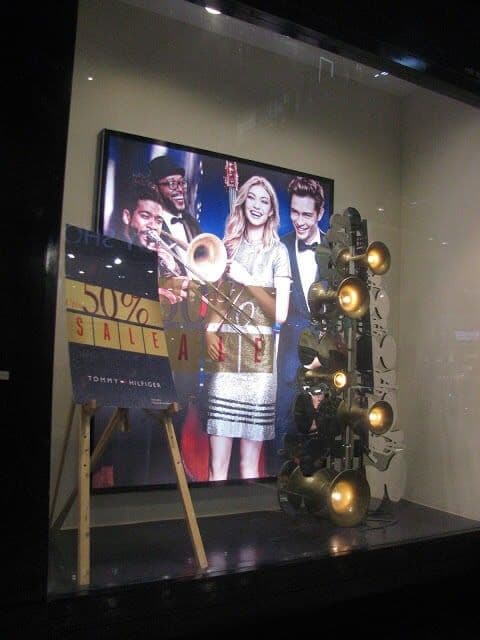
Smart Visual Merchandising strategies beyond the time tested ones for driving traffic into a store. ‘Red’, the most popular and preferred color amongst brands, retailers, shop owners—big and small— in order to grab the attention of passers-by and entice them to enter their stores. Combined with the oft used oversized text message emphasizing a discount or SALE, shoppers are bound to throng the store. This combination of the color Red along with a SALE message is the classic bread and butter duo, impossible to go wrong with it. Yet, malls and marketplaces teaming with retail outlets, run their discounts simultaneously; making it tough to distinguish one retailer from another with rows upon rows of red banners all shouting ‘Sale’. Minor variances such as the typography often go unnoticed. A pre-decided preference for one brand over the other helps customers navigate the mall, but what about the retailer; can they attract newer customers in this critical period of the year? The success behind the combination of the color red with sale employs three basic principles; color, size and isolation. Red, a color known to stop us in our tracks, (think of red signal signs, the red dress, the pouting red lips.) Next, the message takes over, either by way of size (over or undersized as done by Zara) and often in isolation, thus creating a highlighted message. Some retailers do use a similar methodology sans these over used elements to communicate their message, loudly, clearly and differently. The cue lies in the words ‘loudly, clearly, differently’. An effective message is one that grabs eyeballs, makes passers-by pause, interacts and intersects their course of path. This season, blowing its own trumpet is brand, Tommy Hilfiger. With a cluster of bright incandescent lights embedded in the bell shaped horns, fused into the metallic 2D sculpture, this larger-than-life prop piece is sure to get your attention due to its form and the higher lux levels emitted. It complements the brand imagery of popular American model Gigi Hadid, the brand ambassador along with a jazz band in the signature holiday collection. The Sale text in muted gold, is secondary communication, yet bold and clear. All at once, the message through this window display is eclectic, playful and bold, in a preppy with a twist style reminiscent of the brand’s personality. Loudspeakers being the cue, Lifestyle international—from the Landmark group in UAE — followed suit. With a visualization of the loudspeaker’s blare, the angular red quadrangle announces the Sale. Two stylishly dressed mannequins are fronted by a blinking sensor screen with a handprint inviting interaction from onlookers. By placing a palm on this sensor, it shows the number of likes this window display has accumulated. In a matter of half an hour, it clocked over 40 likes. Wouldn’t it be interesting to know the total likes accumulated over the course of 10-12 shopping hours per day through an entire End-of-Season-Sale duration? Not only is this an effective tool for measurability of interaction, it is also successful in creating customer engagement and brand retention. In an increasingly digitalized age, it is a small but concrete step by a retailer to merge bricks with clicks, integrating social media on the storefront to gain traction. Image Courtesy - Namrata Sachdev A few other brands to have effectively used alternative colors are Park Avenue with 3D matte gold letters, Allen Solly and AND with their customary canary yellows and ONLY with hot pink. In conclusion, for brands and retailers looking to cut across the clutter, there is still room for innovation moving beyond the time tested red sale banners. With a little effort, your window displays can be; clear, different, interactive, innovative, emphasizing and resonating the brand’s personality. So, go on and let your smart sale strategies make cash registers ring!

View Full Blog

Coverage

Articles, features and conversations that spotlight NVISAGE and its work.

23 August 2019

Coverage

“Creative Thinking Inspires Ideas And Ideas Inspire Change”- Barbara Januszkiewicz

Read Coverage

22 August 2019

Coverage

There’s More To Spring Than Flowers

Read Coverage

21 August 2019

Coverage

‘Cohesive Merchandise Management Helps’

Read Coverage